
Conceptions of Home in Early Modern German-Language Song
How do belonging and connectedness sound in the early modern period? Where, when, and why does singing about home(s) become important? These are the questions explored in subproject A05.

Project Description
The word Heimat can be traced in its sound back to the 14th century, yet long before the term itself became common, early modern songs were already singing of homeland. They evoke belonging without naming it: a sense that resonated in legal and religious language alike, and whose meaning shimmered across a spectrum—home, house, dwelling, family, community, parish, land, patria, nation. Heimat could signify a concrete, sensuously experienced place, but also a remembered landscape, a spiritual refuge, or a metaphorical space of shared time. This project seeks to uncover the visions and emotions of Heimat that emerged between roughly 1480 and 1650 in German-language song. The early modern period proves an especially sensitive seismograph: as musical-textual notation spread, vernacular song gained new reach and authority; printed song collections, marked by local or regional identity, traveled widely and were read as such; and the song itself became a charged medium of confessional belonging. Working with a wide corpus of printed songbooks, the project traces voices and vocabularies of attachment and connectedness, presenting selected examples in an annotated digital portal. Closely interwoven with other research endeavors and experts in the field, it contributes to a shared attempt to rethink Heimat in all its historical depth and emotional resonance.
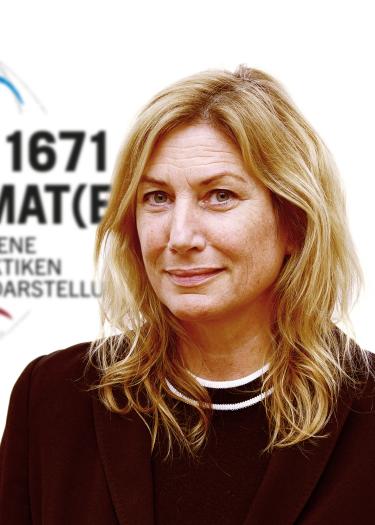

Visiting Scholar 2025/26
Leah Biebert studied Musicology and Modern German Literature, Culture and Media at the University of Freiburg. With support from the State Graduate Funding Programme (LGFG) and the German Academic Exchange Service (DAAD), she earned her doctorate in musicology there. Her current research project investigates 19^(th)-century Rhine Romanticism in music as an expression of the concept of homeland. She is focusing on the musical aesthetic ideas and practices that arose in the context of the Rhine, and how composers incorporated these into their works.


