Deictic imaginations of lost and anticipated for lifeworlds of persecuted German-speaking Jews
The project examines how escape and expulsion shape the way in which old and new homelands are imagined or remembered, verbalizes and narrated by those who have become known as the "Jeckes".

Project description
The project, from a linguistic perspective, explores how forced emigration in the 20th century shapes the ways those affected conceptualize home, language, and belonging. For people forced to leave their homes, this loss disrupts a familiar lifeworld—one that is taken for granted, within reach, tied to everyday language and lived experience. Once gone, this world no longer provides the spatial, temporal, and social orientation it once offered. Instead, it becomes distant and inaccessible, a world beyond reach, turning into an imagined world, or phantasm, as the language psychologist Karl Bühler (1934) described it.
The project starts from the assumption that this disruption of subjective orientation becomes visible in the way people speak about home(s) and belonging. Therefore, the study focuses on linguistic practices used to refer to both the lost and the new home(s), as well as on how speakers, in the act of telling, make absent or lost places present again. The analytic focus is on the models of home developed by German Jews who fled from the Nazi regime to Palestine/Israel, the only non-diasporic Jewish country in the world. In this context, fleeing the old, German-speaking home could also be imagined and lived as a movement out of the diasporic exile and into the biblically promised homeland, the Promised Land. Against the background of biblical ideas of "home", a key theme is therefore the ambivalence–or even reversal–of the concepts "home" and "exile".
As the analysis will show, "home" appears in the oral testimonies of our speakers not only as something irretrievably lost but also as something to be newly created and achieved. The loss of a linguistic and cultural home, and the hope for a new one—where forced migrants often continue to feel foreign—form the poles of a dynamic process. In this process, the lost and the current lifeworld are not dichotomously opposed. Instead, they frequently overlap in complex ways. In contrast to previous studies, this project is the first to analyze the dynamic shifts in subjective orientation between the present lifeworld and the remembered home through the lens of deixis theory and to describe these shifts phenomenologically.
Team
Table
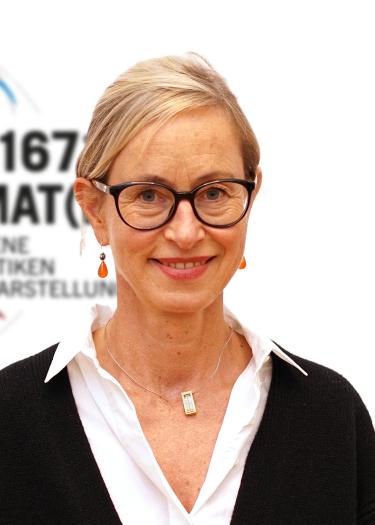
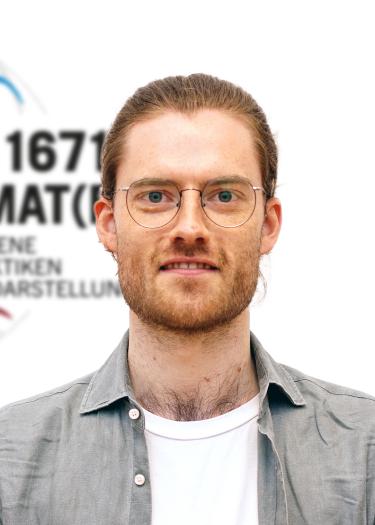
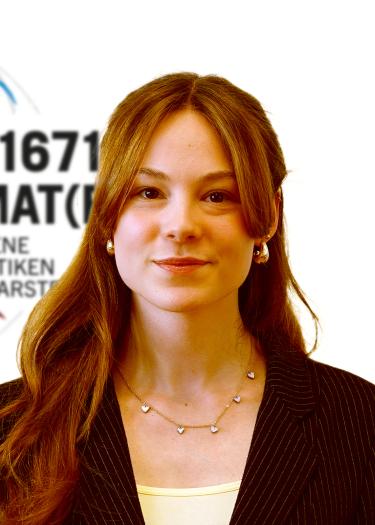
Gastwissenschaftler 2025/26
Tim Alexander Brockmann studierte in Marburg und Reykjavík Neuere Geschichte, Politikwissenschaft sowie Friedens- und Konfliktforschung. Nach seinem Magisterabschluss und einem anschließenden Aufenthalt als Gastwissenschaftler am Richard Koebner Minerva Center for German History (Jerusalem) promovierte er als Wolfson Scholar in Großbritannien. Der Arbeitstitel seines neuen Forschungsvorhabens lautet „Die Geschichte der Beziehungen zwischen der deutsch-jüdischen Diaspora und dem Staat Israel.“
